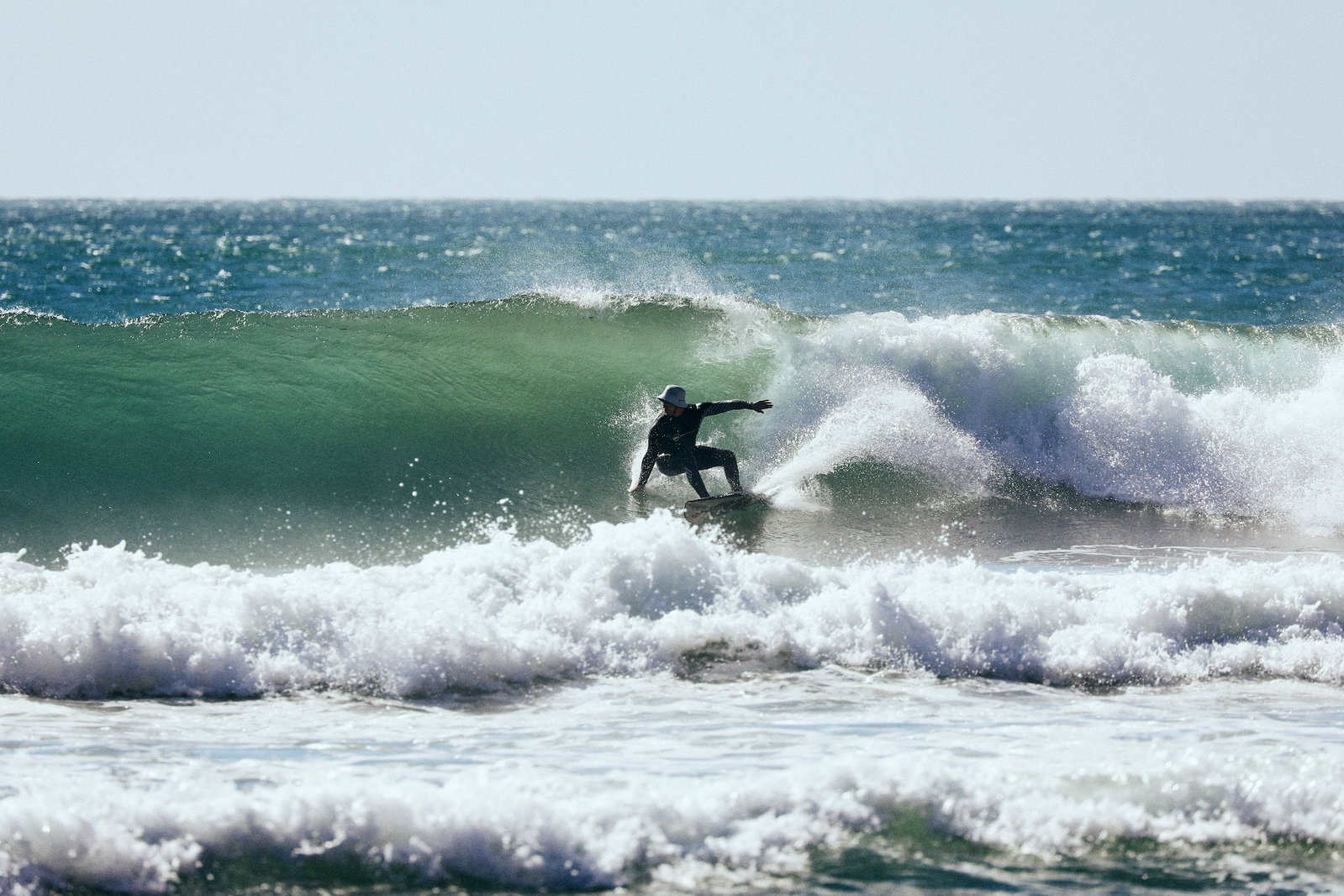
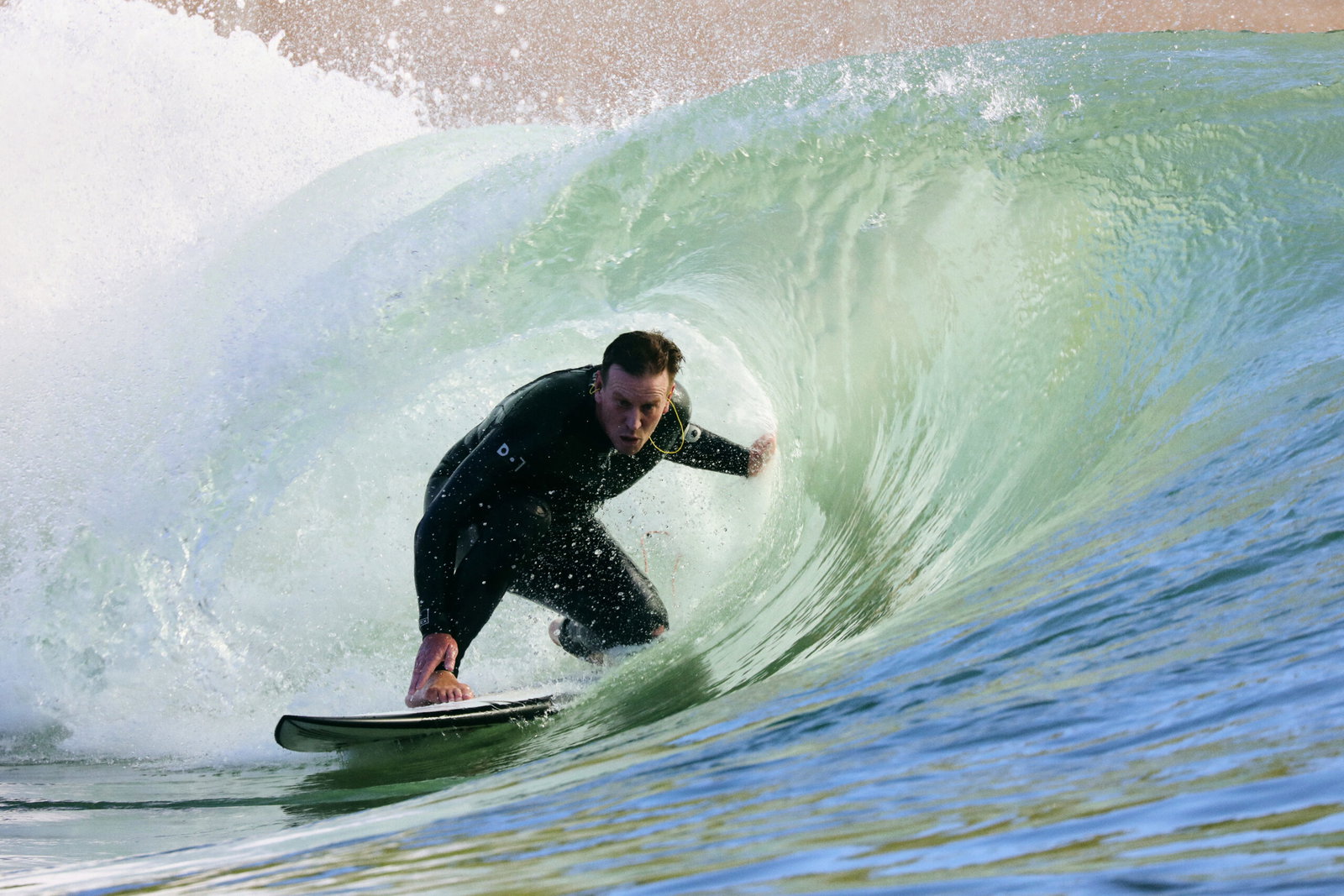
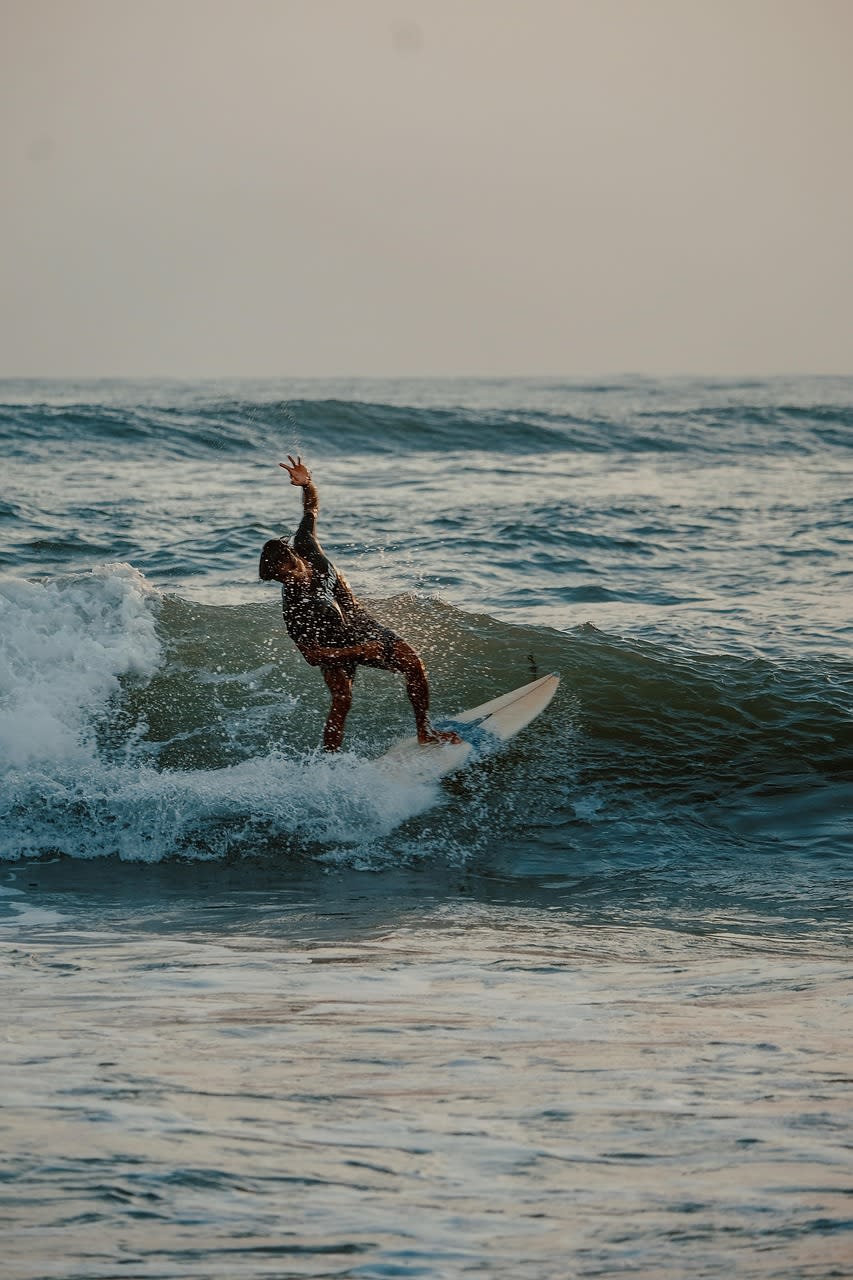
Nearly every intermediate surfer I coach has a surfskate in the garage. Most of them use it the same way: a few minutes of carving up and down a quiet road, feeling fast and loose, and then wondering why none of that shows up in the water the next weekend.
It does not show up because carving is not the skill. Carving is what the board does when you lean. The skill, on a wave, is a turn with a beginning, a middle and an end: you load the board, you unload it in a direction you have chosen, and your eyes have already gone to the next place. A surfskate is the best tool I know for rehearsing that, because it gives you something no wave gives you: the same turn, again and again, with nothing to catch first and no paddle back out.
But only if you use it as a rehearsal, not a toy. Here is how we run it on The Blueprint, and how you can run it on your own.
Why we rehearse the turn on land
A surfer who surfs twice a week in Cornwall might get ten good waves a session. On each of those waves there might be two or three real turns. That is maybe sixty turns a week, every one on a different wave, with a different section, at a different speed. It is a terrible way to learn a movement.
Repetition is how movement gets learned. On the skate you can do sixty turns in ten minutes, all on the same ground, and feel the difference between one and the next. That is the point of a surf-skate simulation: to feel the shape of the turn, slowly and on purpose, so that when a wave offers you the same shape your body already knows it.
So the aim is not to look good on the skate. It is to feel one thing clearly.
The three things to feel
On the Blueprint weekend the Sunday session comes down to three words, and they are the three things we see missing in most intermediate turns. Compression, rotation, eyes. Take them one at a time.
Compression. The commonest fault in a bottom turn is dropping in tall. You come off the take-off with your knees only softly bent, so by the time you reach the bottom of the wave there is nothing left to unload, and the turn goes flat and dies halfway through. On the skate, practise sinking as you go into the turn, not once you are in it. Hips down, knees bent, weight through both feet, and get there before the board starts to carve. The compression should be finished by the time the turn begins. If you find yourself still sinking as the board comes round, you were late.
Rotation. A turn is led from the top of the body down. Shoulders and hips turn toward where you want to go, and the board follows a beat later. Most surfers do it backwards: they push the board round with their feet and leave the shoulders square, which is why the turn stalls after ninety degrees. On the skate, start the turn by turning your leading shoulder and your hips toward the target, and let the board catch up. Notice how much further round it goes, and how much less effort it takes.
Eyes. This is the one that fixes the other two. Where your eyes go, your head goes; where your head goes, your shoulders go; where your shoulders go, the board goes. Before every turn on the skate, pick a target, a lamp post, a crack in the ground, a cone, and put your eyes on it before you start to move. Keep them there through the turn. On a wave, that target is the next section of the wave, not the turn you are in the middle of.
The session, as we run it
You need a surfskate, flat and empty tarmac, and about twenty minutes. You do not need speed. If you are going fast enough to be scared you are going too fast to feel anything.
Start with five minutes of easy pumping to warm up and find the board. Then work the three things in order, and only one at a time.
Compression: ten slow turns each way. Sink before the turn, hold low through it, come up out of it. Pay attention to nothing else. If the turn feels flat, you were tall going in.
Rotation: ten turns each way, but now you start every turn with the shoulders and hips, and you feel for the board following rather than being pushed. The feet do as little as possible.
Eyes: ten turns each way at a marked target. Eyes on the target before you move, and on it until the turn is done. Then put a second target further round and link two turns, moving your eyes to the second target as you finish the first.
Finish by linking all three for a few minutes, slowly, down a long flat stretch. Compress on the way into every turn, lead with the top of your body, and have your eyes on the next target before the current turn is over. That link is the whole thing. It is also what a good surfer is doing on every wave without thinking about it.
What it feels like in the water
The first time it transfers you will probably not notice. You will just have a bottom turn with more drive than usual, or a top turn that came round further than you expected, and you will put it down to the wave.
It was not the wave. The compression was finished by the time your rail engaged, your shoulders led, and your eyes were already on the lip. You rehearsed that sixty times on a Tuesday evening and your body remembered.
Where this fits
On The Blueprint weekend the surf-skate session sits on the Sunday morning, between the third coached surf and the fourth, so you feel the turn on land and then go straight out and try it on a wave with me in the water and the camera on the beach. Every wave is filmed, and the footage goes through Kaizen Lab afterwards, so you can see for yourself whether the compression happened on the way down or at the bottom. The weekends run in Cornwall, £225 a surfer with a £75 deposit and seven places each. The dates are on The Blueprint page.
If you cannot get to a weekend, start with the free plateau guide. It covers the five faults we see in nearly every intermediate surfer, with a drill for each, and the bottom turn is one of them.
Then take the skate out this week. Twenty minutes, flat ground, three things. Compression, rotation, eyes.
Free Resource
Get the Free Intermediate Plateau Guide
5 common technical faults holding intermediate surfers back — and exactly how to fix them. Free PDF.
We’ll send your guide by email. Marketing emails are only sent if you opt in.