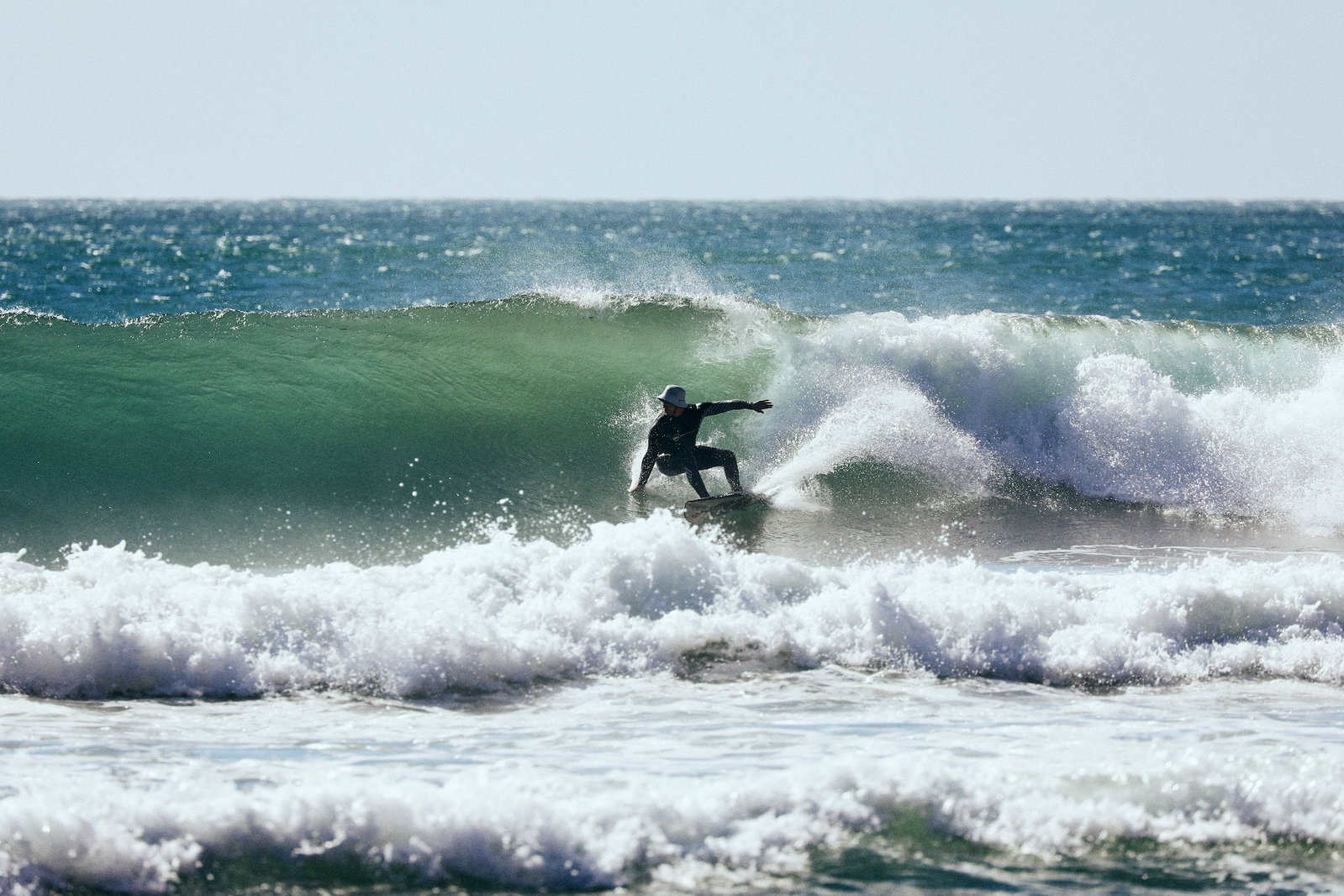
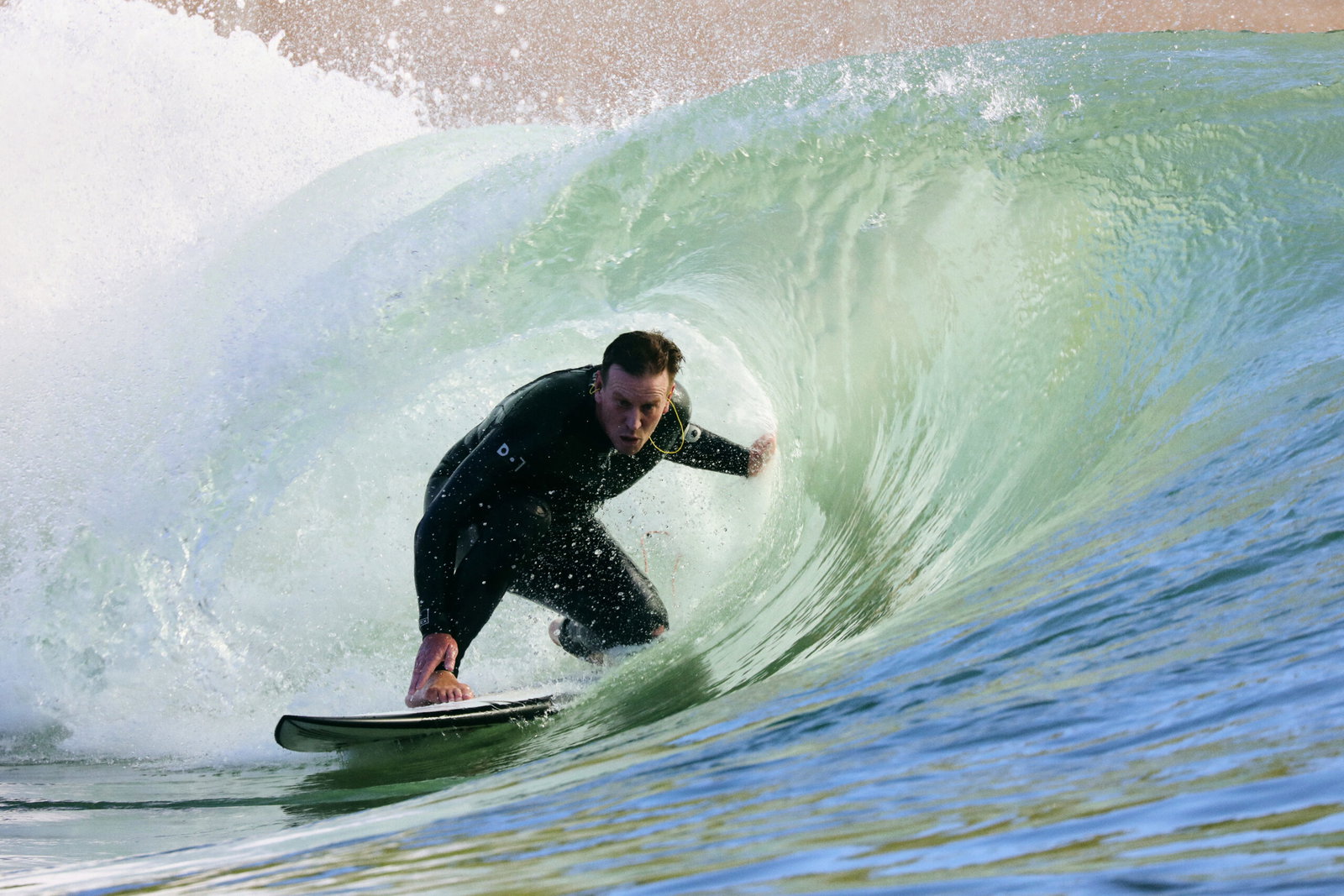
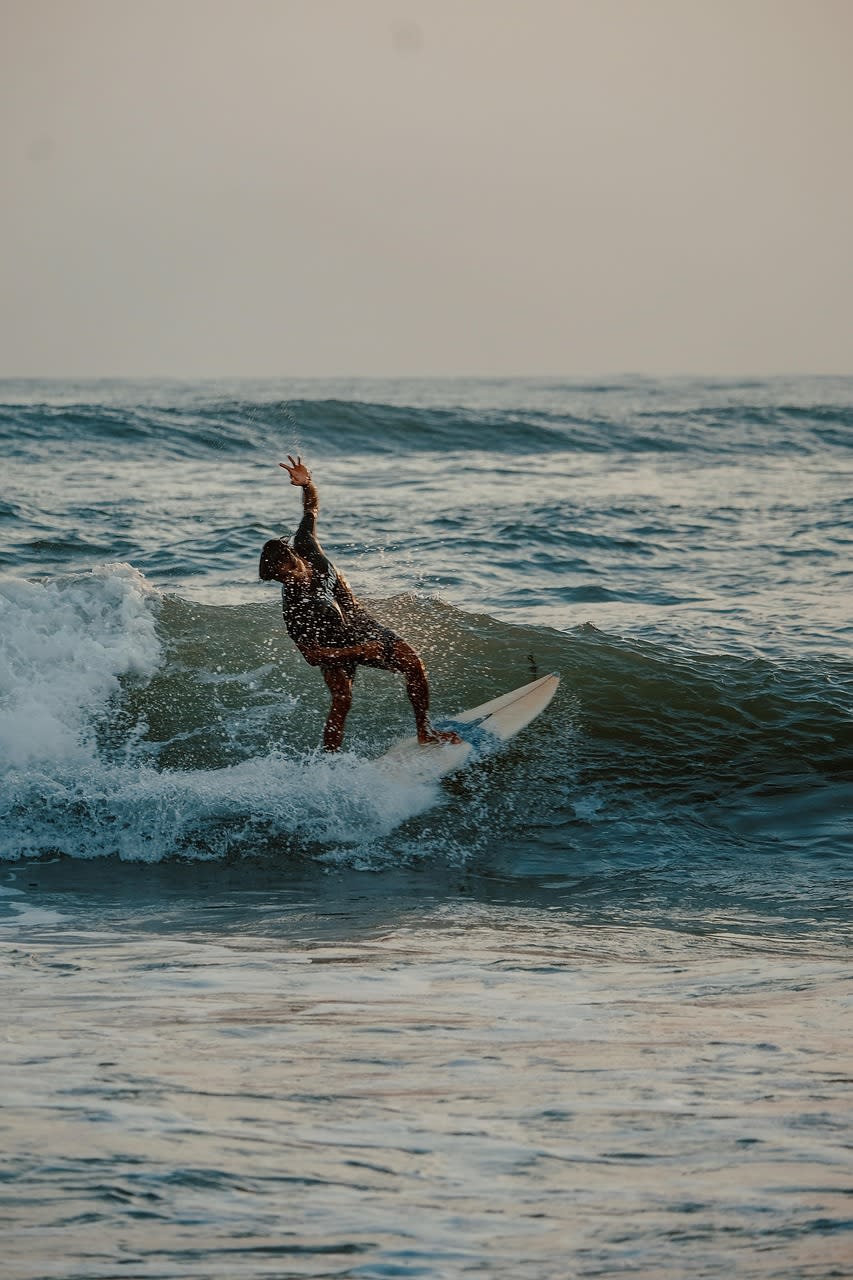
Stand at the top of the beach for a minute and watch the people already out. There is a crowd in one spot, and about half of them are paddling. Not for waves. Just paddling, to get back to where they were before the last set washed them off it.
They are surfing the wave. The surfers who are getting the good ones are surfing the sand underneath it.
A beach break is not a wave. It is a sandbar that makes a wave, and the sand decides everything: where the peak stands up, which way it peels, where it closes out, and where the water goes once it has broken. Learn to read the bar and you stop chasing waves and start waiting where they are going to be. That is the whole skill, and you can learn most of it with your feet dry.
Start on the sand, not in the car park
Give it ten minutes. Not a glance from the steps while you pull your wetsuit on. Walk down to the water's edge, pick a spot, and watch two full sets go through. One wave tells you nothing. Two sets tell you where the bank is.
You are looking for three things.
Where do the waves stand up first? A wave peaks and pitches where the water suddenly gets shallow. The spot where that happens, set after set, is the sandbar. That is your take-off zone.
Where does nothing break? Look for the darker, flatter strip of water beside the peak, usually a little rippled on the surface. That is deeper water, and it is where the water that came in on the waves is draining back out. It is the channel.
Which way does it peel? Watch the peak and see which shoulder stays open. You want to sit just to that side of the peak, on the open shoulder, not under the lip and not out in the white water.
The calm-looking channel is the fast one
Here is the thing most surfers get backwards. The channel looks like the calm bit, so they assume it is where the current is weakest. It is the opposite. The surface is smooth because the water underneath is moving fast, and deep, fast-moving water rarely trips into a wave. That speed is what carved the channel in the first place.
So the channel is your lift out the back: paddle out in it and let it do the work. And it is also the thing that drags you sideways once you are out there, which is why that crowd keeps paddling. Line yourself up against something fixed on the beach, a lifeguard hut, a café, a gap in the dunes, and check it between waves. If your marker has moved, you have moved.
From the sand it reads as colour. Dark, smooth water is the channel: deep, and moving. Pale, textured water is the bank, where the next wave is going to jack up and break.
The tide is rewriting the wave every ninety minutes
The bank you read at nine o'clock is not the bank at half ten. The sand has not moved; the water over it has. The same sandbar can give you a rippable shoulder at mid tide, a hard close-out at low and a mushy nothing at high. When a session that was working suddenly stops, it is rarely bad luck. The tide moved on and you did not.
Three habits fix it. Check the tide chart before you check the forecast, so you know whether you are arriving on a push or a drop and how long you have. Match the bank to the tide: steep, punchy banks generally want more water over them, wide gentle banks want less. And re-read the whole beach every ninety minutes or so, not just your own position. Walk back up the sand if you have to. It costs you five minutes and saves you an hour of paddling at a bank that has stopped working.
Read, do not remember
Same beach, same tide, same time of day as last week. The bank you found will not be there, not exactly. A bank built by one swell gets quietly taken apart by the next, and sand does not care what worked for you on Tuesday.
So walk the sand, watch the sets and check the tide every single time. Treat each session as a fresh read, never a rerun. The surfers who seem to have a sixth sense for where to sit do not have one. They just do the ten minutes on the sand that everyone else skips.
Why this matters more than your next turn
If you are an intermediate surfer who has stopped getting better, there is a good chance wave reading is a bigger part of it than technique. A clean pop-up and a decent bottom turn are worth nothing on a wave you were out of position for, and you cannot practise turns on waves you are not catching. More waves, in the right spot, is the fastest way to more repetitions of everything else.
It is one of the things we look at first. On The Blueprint weekend, the first surf on Saturday morning is wave reading, positioning and take-off, with me in the water beside you calling the set and telling you what I saw before the next one arrives. Every wave is filmed, so you can see afterwards exactly where you sat and where the wave actually broke. Each weekend is four coached surfs, every wave analysed, and a written plan to take home. £225 a surfer, seven places, and a £75 deposit holds yours. The dates are on The Blueprint page.
Before that, though, there is the free plateau guide. It covers the five faults we see in nearly every intermediate surfer, with a drill for each. Reading the water is not one of the five, because it is the thing that makes the other five possible.
Next session, give the sand ten minutes first. Watch two sets. Find the dark water. Then paddle out where the wave is going to be, not where it was.
Free Resource
Get the Free Intermediate Plateau Guide
5 common technical faults holding intermediate surfers back — and exactly how to fix them. Free PDF.
We’ll send your guide by email. Marketing emails are only sent if you opt in.